
Who Are the Best Doctors in Medical Tourism for Cancer Treatment? Exploring Expertise Across Borders
Receiving an oncology diagnosis is overwhelming, but your treatment options should never be limited by geographic borders. When facing such critical health challenges, patients are increasingly asking: who are the best doctors in medical tourism for cancer treatment? By exploring cross-border cancer care, patients unlock access to world-renowned specialists, rapid intervention times, and highly advanced cancer therapies overseas. This comprehensive guide will navigate the global landscape of oncology, helping you identify top-tier international experts and affordable medical tourism destinations to secure the life-saving care you deserve.
Video Chapters & Quick Navigation
The Rise of Global Oncology: Why Patients Seek Cross-Border Care
The paradigm of oncology is shifting rapidly as patients refuse to be constrained by the limitations of their local healthcare systems. Historically, traveling for medical reasons was reserved for the ultra-wealthy, but today, affordable oncology medical tourism has democratized access to life-saving interventions. Patients facing stage 4 cancer diagnoses often encounter staggering wait times at home, which can allow aggressive tumors to metastasize further.
By stepping outside their domestic borders, these individuals can connect with global oncology specialists who operate in fast-paced, highly equipped international medical centers. As discussed at in our video, one of the primary drivers of cross-border cancer care is the pursuit of treatments that have not yet been approved in the patient's home country. Regulatory bodies like the FDA in the United States or the EMA in Europe have rigorous, multi-year trial processes.
While these regulations protect public safety, they can inadvertently block terminal patients from accessing breakthrough therapies. Countries with parallel, highly regulated but more agile approval processes offer a beacon of hope. Furthermore, the financial toxicity associated with long-term cancer treatments drives thousands to look outward, balancing the scales between premium care and economic survival.
Bypassing Domestic Healthcare Bottlenecks
In regions with socialized medicine, such as the United Kingdom or Canada, patients frequently experience severe bottlenecks in accessing specialized diagnostic imaging like PET scans or specialized radiation therapies. Time is the ultimate currency in oncology. The best doctors in medical tourism for cancer treatment operate in private international sectors where wait lists are virtually nonexistent.
These specialized hubs prioritize incoming international patients, offering immediate consultations, rapid diagnostic turnarounds, and expedited surgical scheduling. This logistical agility allows treatments to commence within days of arrival rather than months. When dealing with fast-growing malignancies, this speed of execution directly correlates with higher survival rates and improved long-term patient prognoses.
Identifying the Best Doctors for Cancer Treatment Abroad
Finding a top-tier oncologist internationally requires a meticulous understanding of medical credentials, affiliations, and clinical experience. The most distinguished global oncology specialists do not operate in isolation; they are heavily integrated into the global medical community. When evaluating a potential specialist abroad, patients should prioritize board certifications from recognized international bodies.
Many of the leading physicians in destinations like India, Mexico, and South Korea have completed extensive fellowships at prestigious Western institutions. It is incredibly common to find doctors leading international cancer wards who trained at Memorial Sloan Kettering, Johns Hopkins, or MD Anderson. This cross-pollination of medical education ensures that the standard of care remains universally high.
The Role of Multidisciplinary Tumor Boards
As highlighted at , a hallmark of world-class cancer care is the utilization of a Multidisciplinary Tumor Board (MDT). The best international hospitals do not rely on a single physician to chart a patient's course. Instead, an entire committee comprising medical oncologists, radiation oncologists, surgical oncologists, pathologists, and radiologists collaborates to design a hyper-personalized treatment protocol.
This collaborative approach significantly reduces the margin for error and ensures that all potential therapeutic avenues are considered. When researching top cancer hospitals international, patients should explicitly inquire whether their case will be reviewed by an MDT. This systemic approach guarantees that the patient benefits from the collective expertise of a diverse medical brain trust.
JCI Accreditation and Global Standards
Trust is the foundation of cross-border healthcare. To ensure safety and quality, patients should exclusively seek out facilities holding Joint Commission International (JCI) accreditation. JCI is the global gold standard for healthcare quality, imposing rigorous criteria regarding patient safety, facility hygiene, and surgical outcomes.
Hospitals carrying this seal are regularly audited to ensure they meet or exceed the clinical standards expected in the US or Western Europe. Knowing that a facility adheres to these uncompromising standards provides immense peace of mind for patients and their families as they travel abroad for critical interventions.
Top Destinations for Global Oncology Specialists
The map of medical tourism is vast, but certain countries have carved out unparalleled reputations for specific oncological disciplines. Choosing the right destination depends heavily on the type of cancer, the specific treatments required, and the patient's budget. Let’s explore the leading epicenters for advanced cancer therapies overseas.
Germany: The Pinnacle of Precision Medicine
Germany stands at the absolute forefront of European medical tourism, renowned globally for its precision medicine and pioneering research. Centers like the Heidelberg University Hospital are famous for offering cutting-edge treatments such as Heavy Ion Therapy, which is highly effective against radiation-resistant tumors. German oncologists are meticulous, relying heavily on deep genomic profiling to administer highly targeted therapies.
South Korea: Robotics and Gastrointestinal Excellence
For patients facing gastrointestinal, liver, or stomach cancers, South Korea offers survival rates that frequently surpass those in the United States. South Korean hospitals, such as Samsung Medical Center, lead the world in robotic-assisted tumor resections. Their surgeons boast unparalleled high-volume experience, resulting in minimally invasive procedures, reduced hospital stays, and lower post-operative complication rates.
India: High-Volume Expertise and Unmatched Affordability
India is the global heavyweight when it comes to combining world-class expertise with affordable oncology medical tourism. Institutions like Apollo Hospitals and Tata Memorial manage some of the highest patient volumes globally. This sheer volume translates to immense clinical experience for Indian oncologists. Furthermore, complex surgeries and targeted chemotherapy regimens are available at a fraction of Western prices, making it a lifeline for underinsured patients.
Mexico: Proximity and Integrative Oncology
For North American patients, Mexico offers the distinct advantage of geographic proximity, eliminating the physical strain of long-haul flights. As detailed at in the video presentation, Mexican cancer centers frequently excel in integrative oncology. This approach aggressively targets the tumor using conventional methods like chemotherapy while simultaneously supporting the patient's immune system with advanced nutritional, holistic, and hyperthermia therapies.
Accessing Advanced Cancer Therapies Overseas
The primary motivation for many seeking cross-border cancer care is the availability of next-generation therapies. Medical technology evolves rapidly, and international clinics are frequently the early adopters of revolutionary treatments. These modalities aim not only to eradicate cancer cells but to preserve healthy tissue and maintain the patient's quality of life.
Proton Beam Therapy
Traditional radiation therapy can be a blunt instrument, damaging healthy tissue surrounding the tumor. Proton Beam Therapy, however, delivers a concentrated beam of protons that stop precisely at the tumor site. This drastically reduces collateral damage, making it the preferred treatment for pediatric cancers, brain tumors, and prostate cancer. Facilities in Europe and Asia are offering this multi-million-dollar technology to medical tourists at highly competitive rates.
CAR T-Cell Therapy and Immunotherapy
As referenced at , CAR T-Cell therapy is a revolutionary approach where a patient’s own T-cells are extracted, genetically re-engineered in a lab to recognize cancer cells, and reinfused into the body. It essentially turns the patient's immune system into a targeted cancer-killing machine. While prohibitively expensive and strictly gated in the US, top cancer hospitals international in countries like China and Spain are pioneering wider applications of CAR-T for various hematological malignancies.
HIPEC (Hyperthermic Intraperitoneal Chemotherapy)
For advanced abdominal cancers, standard intravenous chemotherapy often falls short. HIPEC involves surgically removing visible tumors and then directly pumping heated chemotherapy drugs into the abdominal cavity. This localized, heated wash penetrates microscopic cancer cells more effectively. Sourcing specialized surgical oncologists skilled in HIPEC is a major driver for stage 4 cancer treatment medical tourism.
Cost Comparison: Affordable Oncology Medical Tourism
The financial devastation caused by cancer is a silent epidemic. In the United States, out-of-pocket expenses, even for insured patients, can lead to bankruptcy. Medical tourism directly combats this by offering transparent, bundled pricing that covers diagnostics, surgeries, therapies, and hospital stays.
Discussed extensively at , the cost differential is not due to a reduction in quality. Instead, it reflects differences in international labor costs, lower administrative overhead, favorable exchange rates, and the absence of inflated pharmaceutical markups. Let's look at a comparative breakdown of standard oncological procedures.
| Treatment/Procedure | Est. Cost USA ($) | Est. Cost India ($) | Est. Cost Turkey ($) | Est. Cost Mexico ($) |
|---|---|---|---|---|
| Chemotherapy (per cycle) | $5,000 - $12,000 | $400 - $1,200 | $800 - $2,000 | $1,000 - $2,500 |
| CyberKnife Radiation | $35,000 - $50,000 | $5,500 - $8,000 | $7,000 - $10,000 | $9,000 - $12,000 |
| Prostatectomy (Robotic) | $30,000 - $45,000 | $6,000 - $8,500 | $9,000 - $14,000 | $10,000 - $15,000 |
| Mastectomy & Recon. | $25,000 - $40,000 | $4,500 - $7,000 | $6,000 - $9,000 | $7,000 - $11,000 |
Factoring in Ancillary Costs
While the medical savings are immense, patients must accurately calculate the ancillary costs of cross-border cancer care. This includes round-trip airfare, long-term accommodation for recovery, medical visas, and living expenses for a companion. Even when these logistics are fully accounted for, the total expenditure typically remains 50% to 70% lower than pursuing the same care domestically without robust insurance coverage.
Preparing for Your Medical Journey: Logistics and Planning
Traveling internationally with a compromised immune system requires rigorous preparation. It is not as simple as booking a flight; it requires meticulous medical coordination. The first critical step is consolidating your entire medical history. This includes high-resolution digital copies of MRI/CT/PET scans, detailed biopsy pathology reports, and comprehensive doctor notes detailing previous chemotherapy regimens.
International oncologists need this holistic view to avoid repeating invasive diagnostic tests and to formulate an immediate action plan upon your arrival. Patients must also undergo pre-flight medical clearances, securing a "fit-to-fly" certificate from their local physician to ensure they can safely handle changes in cabin pressure and the physical strain of transit.
The Role of Medical Tourism Facilitators
Navigating the global healthcare matrix independently can be daunting. As mentioned at in our feature video, working with established facilitators like PlacidWay is a game-changer for patients. Facilitators act as a bridge between the patient and the foreign hospital. They assist in translating medical records, securing rapid virtual consultations with global oncology specialists, and negotiating treatment packages.
Furthermore, experienced facilitators handle the vital on-the-ground logistics. This includes arranging specialized airport transfers, booking sterilized recovery accommodations near the hospital, and providing bilingual medical concierges to ensure nothing is lost in translation during critical doctor-patient interactions.
Genomic Profiling and Personalized Oncology
We have officially moved past the era of one-size-fits-all chemotherapy. Today, the most successful interventions in stage 4 cancer treatment medical tourism are deeply rooted in genomic profiling. International clinics utilize advanced liquid biopsies and tissue sequencing to map the exact DNA mutations driving a specific tumor's growth.
Once the molecular footprint of the cancer is identified, oncologists can prescribe highly targeted therapies. These customized systemic drugs attack the cancer at a cellular level, interrupting the specific pathways the tumor uses to divide and survive. This bespoke approach yields dramatically higher efficacy rates while sparing the patient from the broad-spectrum toxicity of conventional chemo.
Post-Treatment Continuity of Care
A major concern for patients engaging in cross-border cancer care is what happens when they return home. The best international hospitals prioritize continuum of care. Before discharge, patients receive fully translated, highly detailed discharge summaries outlining exact surgical notes, radiation dosages administered, and ongoing pharmaceutical requirements.
Leading international oncologists also make themselves available for virtual follow-up consultations. They frequently collaborate directly with the patient’s local general practitioner or domestic oncologist to ensure a seamless transition of care, ongoing bloodwork monitoring, and rapid intervention if any complications arise post-travel.
Empowering Your Journey to Healing
Cancer is relentless, but so is the global medical community's dedication to defeating it. By breaking free from geographic healthcare confines, patients discover a world teeming with brilliant medical minds, innovative technologies, and compassionate care. Finding the best doctors in medical tourism for cancer treatment is an empowering step toward reclaiming control over your health destiny.
Thorough research, transparent communication, and partnerships with certified medical centers are the keys to a successful medical journey abroad. Whether seeking advanced immunotherapy in Europe, precision robotics in Asia, or affordable comprehensive care in Latin America, the world is open and ready to support your fight for life and recovery.
Ready to Explore Global Cancer Treatment Options?
Do not let local limitations dictate your healthcare journey. PlacidWay connects you with globally accredited hospitals and top-tier oncology specialists worldwide. Discover advanced therapies, transparent pricing, and comprehensive medical travel support today.
GET A FREE MEDICAL QUOTE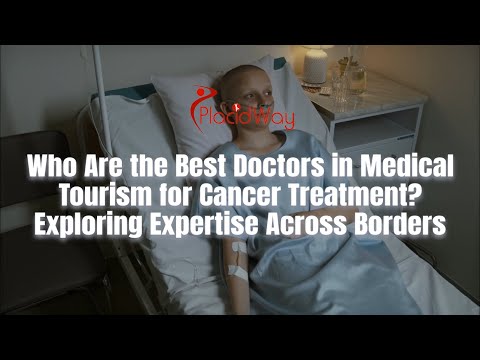





.png)





Share this listing