


The Ultimate Guide to Achieving a Natural Hairline in Hair Transplantation
About this guide: The most critical element of any successful hair restoration procedure is the creation of a seamless, undetectable hairline. When patients seek solutions for their hair loss, their primary concern is rarely the crown or the mid-scalp; it is almost always the aesthetic framing of their face. Achieving a flawless hairline in hair transplantation is what separates average clinical results from true surgical artistry.
A poorly designed frontal hairline can leave patients with unnatural, "doll-like" appearances that draw unwanted attention. Conversely, a meticulously crafted natural hairline design in hair transplant surgery restores not just the patient's hair, but their youth, confidence, and facial harmony. In this comprehensive breakdown, we will explore the precise medical techniques, anatomical rules, and aesthetic principles required to reconstruct the perfect frontal hairline.
Video Chapters & Quick Navigation
The Art and Science of Hairline Restoration
The frontal hairline is widely considered the visual signature of the hair transplant surgeon. When looking at the face, the human eye naturally gravitates toward the framing provided by the hair. If the hairline in hair transplantation is too straight, too dense, or placed too low, the result will look remarkably artificial.
Modern hair restoration for receding hairlines has evolved significantly from the archaic punch-graft techniques of the past. Today, leading surgeons approach the scalp as a blank canvas, blending medical precision with a profound understanding of aesthetics. At , we see how the initial mapping and design phase sets the foundation for the entire surgical procedure.
The ultimate goal is not just to implant hair, but to mimic nature so perfectly that even a hairstylist cannot tell a transplant has occurred. This requires the surgeon to painstakingly recreate the soft, feathery appearance of a natural transition zone. Every single follicle must be strategically placed to ensure the density of the hairline in hair grafts looks entirely organic as it grows.
Mastering Facial Proportions and the Rule of Thirds
Designing a perfect hairline begins long before the first incision is made. It starts with comprehensive facial mapping based on classic anatomical principles, specifically Leonardo da Vinci’s "Rule of Thirds." According to this rule, an aesthetically pleasing face is divided into three equal horizontal sections.
The first section extends from the chin to the base of the nose. The second section spans from the base of the nose to the glabella (the space between the eyebrows). Finally, the third section measures from the glabella to the anterior leading edge of the frontal hairline. By utilizing these measurements, surgeons can calculate exactly where a receding hairline restoration surgery should begin.
However, mathematical formulas are only a starting point. An expert surgeon must also account for the patient's age, facial structure, and future hair loss trajectory. Placing a juvenile, aggressive hairline on a 50-year-old male often leads to an unnatural contrast as the patient ages. The best approach involves designing an age-appropriate hairline that will look dignified and natural for decades to come.
The Temporal Invasions and Recessions
A natural adult male hairline is rarely a perfectly rounded bell shape. It naturally features mild recessions at the temples, known as fronto-temporal triangles. Completely filling in these triangles is a common amateur mistake that destroys the natural aesthetic of an FUE hairline transplant procedure.
The surgeon must carefully balance the mid-frontal point with the temporal peaks. This delicate interplay between the central tuft and the receding corners creates the mature, distinguished look that is the hallmark of a world-class hair transplant. At , observing the precise angle of the temporal points demonstrates how critical this spatial awareness is during surgery.
The Micro-Anatomy of the Frontal Hairline Zone
To truly understand how to design a perfect hairline, one must dissect the micro-anatomy of a natural scalp. Nature does not create abrupt walls of thick hair; it builds density through subtle gradients. Hair restoration specialists divide the frontal area into three distinct micro-zones.
- The Anterior Border: This is the very first line of hair. It should be scattered, sparse, and entirely devoid of any recognizable geometric pattern.
- The Transition Zone: Extending about 0.5 to 1 centimeter behind the anterior border, this zone gradually increases in density. It acts as a visual bridge to the thicker hair behind it.
- The Defined Zone: Sitting directly behind the transition zone, this is where maximum density is achieved to block light from hitting the scalp and creating the illusion of fullness.
Failure to respect these three zones is what leads to "pluggy" or harsh results. The transition zone must be soft and feathery. If multiple-hair grafts are mistakenly placed in the anterior border, the eye immediately registers the hairline as counterfeit.
The Science of Follicular Unit Selection
Hair does not grow in single strands across the entire scalp. Instead, it grows in tiny bundles called follicular units, which can contain anywhere from one to four individual hairs. The selective harvesting and strategic placement of these specific units are paramount in a natural hairline design in hair transplant surgery.
During the extraction phase, the surgical team meticulously categorizes the grafts under high-powered microscopes. They separate the single-hair grafts from the two-hair, three-hair, and four-hair grafts. This segregation is arguably the most crucial step in preparing for the implantation phase of the surgery.
| Hairline Zone | Required Graft Type | Aesthetic Purpose |
|---|---|---|
| Anterior Border | Fine 1-Hair Grafts Only | Creates a soft, undetectable, feathery leading edge. |
| Transition Zone | Mix of 1-Hair and 2-Hair Grafts | Gradually builds density while maintaining softness. |
| Defined Zone | 3-Hair and 4-Hair Grafts | Provides maximum volume, bulk, and light blockage. |
As highlighted at , strict adherence to this graft distribution model prevents the dreaded "pluggy" appearance. Placing a thick, three-hair graft in the very front of the scalp is an irreversible error that instantly compromises the natural look of the entire restoration.
Mastering the Micro-Irregularity Technique
In nature, perfection is an illusion. A perfectly straight, ruler-drawn hairline does not exist on a natural human scalp. When amateur surgeons attempt to create a perfectly symmetrical, linear frontal border, they inadvertently create an artificial wall of hair. The secret to an invisible transplant lies in intentional imperfection.
Elite hair transplant surgeons employ the "Micro-Irregularity Technique." This involves creating deliberate, jagged zig-zags along the anterior border. Sometimes referred to as a "snail track" design, this staggered approach mimics the random, asymmetrical way native hair naturally erupts from the scalp.
Macro-irregularities are also incorporated. This means that one side of the hairline might feature a slightly different temporal angle or recession depth than the other, accounting for the natural facial asymmetry present in all humans. This chaotic, yet highly controlled distribution ensures that when the hair grows out, it blends seamlessly with the patient's native bio-hair.
Angle, Direction, and Elevation Control
Graft selection and irregular placement mean nothing if the angle of the implanted hair is incorrect. Native hair does not stand straight up at a 90-degree angle from the scalp. In the frontal hairline, hair typically emerges at a very acute angle, often lying nearly flat against the skin at about 10 to 15 degrees.
The direction of hair growth also changes dynamically across the scalp. In the center of the hairline, hairs point directly forward. However, as the hairline moves outward toward the temporal peaks, the hair naturally begins to fan outwards in a lateral direction. A master surgeon must precisely angle their incisions (often using lateral slit techniques or sapphire blades) to match these complex directional shifts.
Gender and Ethnic Differences in Hairline Design
There is no "one-size-fits-all" template for hairline in hair transplantation. The design must be heavily customized based on the patient's gender and ethnic background. A female hairline lowering transplant, for example, requires an entirely different surgical blueprint than a male restoration.
Male hairlines are characteristically M-shaped or U-shaped, featuring distinct temporal recessions even in youth. Conversely, a natural female hairline is typically oval or flat, lacking the temporal recessions seen in men. Female hairlines also feature a "cowlick" or a multi-directional growth pattern at the frontal tuft much more frequently than male hairlines do.
Ethnic characteristics also dictate the surgical approach. Afro-textured hair curls subcutaneously beneath the skin and requires specialized extraction and angulation techniques. Asian hair is typically thicker in caliber and straighter, meaning fewer hairs are needed to create the illusion of density, but graft placement must be exceptionally precise as contrast against the scalp is usually higher. Caucasian hair varies wildly in caliber and color, requiring adaptive strategies for every individual patient.
Advanced Surgical Methods: FUE, FUT, and DHI
The method used to extract and implant the grafts heavily influences the final aesthetic of the hairline. While Follicular Unit Transplantation (FUT) involves removing a strip of tissue from the donor area, Follicular Unit Extraction (FUE) involves harvesting individual grafts one by one. Today, FUE is the predominant choice for crafting natural hairlines due to its minimal scarring.
Within the FUE umbrella, Direct Hair Implantation (DHI) has emerged as a revolutionary technique for hairline detailing. As seen at , the use of Choi Implanter Pens in DHI allows the surgeon to control the exact depth, angle, and direction of the hair follicle simultaneously.
This level of micro-control is incredibly beneficial when working in the delicate anterior border. The implanter pen eliminates the need to create pre-made slits, reducing trauma to the scalp and allowing for denser packing of the single-hair grafts. This translates to faster healing times and a vastly superior density of hairline in hair grafts.
The Role of Sapphire Blades in Hairline Creation
For surgeons who prefer the traditional slit-making method, Sapphire FUE has become the gold standard for hairline incisions. Unlike standard steel scalpels, sapphire blades are V-shaped, incredibly sharp, and smooth. This allows the surgeon to make microscopic, highly precise channels that perfectly match the size of the extracted follicular unit.
Because the sapphire blades cause less tissue damage, the surrounding skin heals much faster with minimal scabbing. More importantly, the V-shape of the blade allows the surgeon to place the single-hair grafts much closer together, creating a tighter, more cohesive frontal zone without compromising the blood supply required for graft survival.
Corrective Hairline Surgery: Fixing Past Mistakes
As the demand for affordable hair restoration has skyrocketed, so too has the number of black-market clinics performing substandard work. One of the most common reasons patients seek revision surgery is to correct a botched, unnatural hairline designed by inexperienced technicians.
Correcting a bad hairline is significantly more complex than performing a primary transplant. The surgeon must often extract the improperly angled, multi-hair grafts from the frontal zone using specialized FUE punches. These larger grafts are then dissected under a microscope into single-hair units and re-implanted correctly.
Additionally, the surgeon must camouflage the scarring left behind by the previous poor incisions. This involves surrounding the old, pluggy grafts with a new, dense network of ultra-fine single hairs to soften the harsh border. Corrective hairline restoration requires the absolute highest echelon of surgical skill to restore the patient's natural appearance.
Recovery, Density, and Long-Term Hairline Success
The success of a hairline in hair transplantation is not solely dependent on the surgery itself; the patient's post-operative care plays a massive role. The newly implanted grafts in the frontal zone are incredibly fragile during the first 10 days. Patients must sleep at an elevated angle and avoid any direct contact or friction against the new hairline.
It is important to manage expectations regarding the density of the hairline. Around the third or fourth week post-operation, patients will experience "shock loss," where the newly transplanted hairs shed. This is a completely normal physiological response. The follicles remain securely anchored beneath the skin, entering a resting phase.
True results of a receding hairline restoration surgery begin to emerge around month four or five, with the hairs initially appearing fine and thin. Over the course of 12 to 18 months, these hairs will mature, thicken, and adapt to the characteristics of the native frontal hair. By month eighteen, the final aesthetic of the micro-irregularity design, proper angulation, and optimal density will be fully realized, delivering a permanent, natural frame to the face.
Ready to Reclaim Your Natural Hairline?
PlacidWay Medical Tourism connects you with world-renowned hair transplant surgeons who specialize in advanced, natural hairline design. Discover top-rated international clinics offering premium FUE and DHI procedures at a fraction of the cost.
GET A FREE CONSULTATION & QUOTE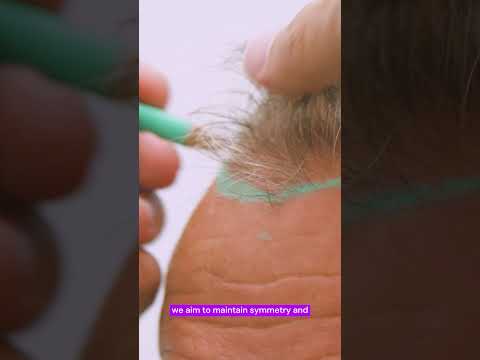



.png)
_imresizer.jpg)
.png)
.png)






Share this listing