


Joint Repair Treatments in Fort Lauderdale, USA by Regenestem
Restoring Mobility: Barbie's Journey with Regenerative Medicine for Joint Repair at Regenestem in Fort Lauderdale
Living with chronic pain can completely derail your active lifestyle, but a new era of medical innovation is changing the prognosis for joint degeneration. In this powerful documentary-style feature, we follow a patient's pursuit of restoring mobility with regenerative medicine for joint repair at Regenestem in Fort Lauderdale. Rather than succumbing to the limitations of severe osteoarthritis and the daunting prospect of invasive orthopedic surgery, she chose a groundbreaking cellular approach.
This inspiring story highlights the profound capabilities of the human body to heal itself when provided with advanced biological support. Discover how cutting-edge treatments like stem cell therapy for joint pain and platelet-rich plasma injections are providing viable, non-surgical joint repair treatments that help patients reclaim their active, pain-free lives without lengthy hospital stays.
Video Chapters & Quick Navigation
The Crippling Reality of Chronic Joint Degeneration
Millions of adults worldwide suffer from the debilitating effects of joint degeneration, a condition that slowly erodes cartilage and diminishes the quality of life. For Barbie, the protagonist of our video, the gradual onset of joint pain transitioned from a minor inconvenience into a major barrier to her daily activities. As seen at , the simple act of walking up a flight of stairs or enjoying a morning stroll became a monumental physical challenge.
Osteoarthritis and general wear-and-tear on the joints cause the protective cartilage cushioning the bones to wear away. This leads to bone-on-bone friction, resulting in chronic inflammation, severe pain, and significant stiffness. Traditional medicine often views this deterioration as an inevitable part of aging, offering a limited scope of symptom management rather than addressing the root cause of the structural decline.
When the pain reaches a critical threshold, patients are frequently told that their only remaining option is a total joint replacement. This invasive surgical route comes with a lengthy rehabilitation period, potential surgical complications, and the psychological burden of undergoing major orthopedic intervention. The prospect of losing independence during a grueling postoperative recovery is often just as frightening as the joint pain itself.
The Psychological Toll of Mobility Loss
It is crucial to understand that chronic joint pain is not merely a physical ailment; it carries a profound psychological weight. The inability to participate in beloved hobbies, travel comfortably, or even play with grandchildren can lead to feelings of isolation and depression. Barbie's emotional candidness at perfectly captures the frustration of feeling trapped inside a body that is seemingly failing.
This loss of autonomy drives many patients to seek alternative, forward-thinking medical solutions. They are no longer willing to accept symptom masking as a viable long-term strategy. The modern patient is empowered, educated, and actively searching for advanced orthopedic regenerative treatments that prioritize healing from within rather than structural amputation and artificial replacement.
Barbie's Turning Point: Seeking Non-Surgical Joint Repair Treatments
Before discovering the potential of biological healing, Barbie navigated the standard conservative treatment protocol. This typical journey involves a frustrating cycle of oral non-steroidal anti-inflammatory drugs (NSAIDs), physical therapy, and eventual corticosteroid injections. While these methods can temporarily alleviate discomfort, they do nothing to rebuild the damaged tissue inside the joint cavity.
In fact, prolonged use of cortisone injections has been shown in various clinical studies to potentially accelerate cartilage degradation over time. Realizing that these conventional treatments were merely a band-aid solution, Barbie began researching non-surgical joint repair treatments. She wanted a therapy that aligned with her body's natural healing mechanisms, leading her directly into the promising field of regenerative medicine.
Breaking Free from the Pharmaceutical Cycle
The over-reliance on pain medication is a significant concern for orthopedic patients. Daily consumption of painkillers can lead to gastrointestinal issues, cardiovascular complications, and a dangerous dependency. By pivoting her focus toward regenerative medicine clinics in Florida, Barbie aimed to break free from this pharmaceutical cycle entirely.
Her goal was ambitious yet scientifically grounded: to naturally lower inflammation, stimulate the growth of new cartilage cells, and restore the lubricating synovial fluid within her joint. This fundamental shift in medical philosophy—from managing decay to actively promoting regeneration—marks a turning point for thousands of patients seeking alternatives to joint replacement.
The Science Behind Regenerative Medicine for Joint Repair
Regenerative medicine is a revolutionary branch of healthcare focused on repairing, replacing, or regenerating human cells, tissues, or organs to restore normal function. For joint repair, this means utilizing the body's own biological materials—or safely sourced biological agents—to jumpstart the healing process in an environment that has otherwise stagnated. At , the medical team breaks down the exact mechanisms of these therapies.
Understanding Mesenchymal Stem Cells
At the core of many advanced orthopedic regenerative treatments are Mesenchymal Stem Cells (MSCs). These are multipotent adult stem cells that have the unique ability to differentiate into a variety of cell types, including osteoblasts (bone cells) and chondrocytes (cartilage cells). When injected into a damaged joint, MSCs act as a biological construction crew.
They immediately go to work by releasing powerful anti-inflammatory proteins that calm the hostile, inflamed environment of an arthritic joint. Furthermore, they secrete growth factors that signal the body's local cells to begin repairing the damaged tissue. This dual-action approach—halting destructive inflammation while promoting structural repair—is why stem cell therapy for joint pain is gaining immense popularity.
The Role of Platelet-Rich Plasma (PRP) Therapy
Often used in conjunction with stem cells, Platelet-Rich Plasma (PRP) therapy is another foundational pillar of regenerative orthopedics. PRP is derived directly from the patient's own blood. A small sample is drawn and placed into a centrifuge, which spins at high speeds to separate the red blood cells from the plasma and platelets.
The resulting golden fluid is a highly concentrated serum of platelets, which are packed with essential growth factors. When this PRP is precisely injected into the injured joint, it acts as a catalyst for tissue healing. PRP therapy for knee and hip pain is widely recognized for its safety profile, as it utilizes autologous (the patient's own) material, completely eliminating the risk of allergic reaction or rejection.
Why Regenestem in Fort Lauderdale?
The success of regenerative therapy relies heavily on the expertise of the medical practitioners and the quality of the laboratory protocols used. Barbie's extensive research led her to Regenestem in Fort Lauderdale, a premier medical facility renowned for its cutting-edge biological treatments. As detailed at , the clinic represents the pinnacle of modern regenerative care.
Regenestem stands out among regenerative medicine clinics in Florida due to its comprehensive, patient-centric approach. They do not employ a one-size-fits-all methodology; instead, they conduct exhaustive diagnostic evaluations to determine the precise biological treatment protocol required for each individual's unique joint pathology. This meticulous attention to detail ensures that patients receive the highest concentration of viable cells possible.
A Hub for Advanced Orthopedic Regenerative Treatments
Fort Lauderdale has rapidly evolved into a leading destination for medical tourism, particularly in the fields of orthopedics and anti-aging medicine. Patients from across the United States and abroad travel to Regenestem to access therapies that may not be available or expertly administered in their local regions. The clinic's state-of-the-art laboratory facilities ensure the pristine processing of stem cells and PRP.
Furthermore, the medical staff at Regenestem are board-certified specialists with extensive specialized training in image-guided injection techniques. This is a critical factor; the most potent stem cells in the world will be ineffective if they are not delivered precisely to the site of the tissue damage. The clinic's commitment to utilizing advanced fluoroscopy and musculoskeletal ultrasound guarantees pinpoint accuracy during every procedure.
Step-by-Step: The Regenerative Procedure Experience
One of the most intimidating aspects of seeking new medical treatments is the fear of the unknown. Barbie's regenerative medicine journey beautifully demystifies the actual procedure, showcasing how surprisingly straightforward and minimally invasive the process is. At , the video takes viewers inside the treatment room, offering a transparent look at the clinical protocols.
Comprehensive Diagnostics and Ultrasound Guidance
The procedure day begins with a thorough review of the patient's diagnostic imaging, such as MRI and X-ray results. The medical team at Regenestem maps out the exact target zones within the joint capsule. Unlike traditional blind injections, which rely solely on anatomical landmarks and physician feel, regenerative treatments require absolute precision to ensure the cells reach the degraded cartilage.
Using real-time ultrasound guidance, the physician visualizes the needle's path as it enters the joint space. This technology allows the doctor to navigate around blood vessels and nerves, ensuring maximum safety and patient comfort. The biological agents—whether stem cells, PRP, or a combination of both—are then carefully deployed directly into the micro-tears and arthritic lesions of the joint.
A Minimally Invasive Outpatient Approach
Remarkably, the entire process is completed as an outpatient procedure. There is no need for general anesthesia, no surgical incisions, and no overnight hospital stay. Patients are typically awake and comfortable throughout the treatment, utilizing only local anesthetics to numb the injection site.
Within a few hours of arriving at the Regenestem facility, Barbie was able to walk out under her own power. This stark contrast to the trauma of traditional joint replacement surgery is one of the primary reasons why restoring mobility without surgery has become such a highly sought-after medical path. The body is not forced to recover from surgical trauma; it can immediately direct its energy toward cellular repair.
Regenerative Therapy vs. Traditional Joint Surgery
When evaluating medical options, it is helpful to look at a direct comparison between the emerging field of regenerative medicine and the traditional standard of care. Understanding these differences empowers patients to make informed decisions regarding their long-term orthopedic health.
| Feature | Regenerative Medicine (Stem Cells/PRP) | Traditional Joint Replacement Surgery |
|---|---|---|
| Invasiveness | Minimally invasive needle injection. | Highly invasive surgical bone removal. |
| Anesthesia | Local anesthesia only. | General anesthesia or heavy spinal block. |
| Recovery Time | Days of minor soreness; weeks for full integration. | 3 to 6 months of intense physical rehabilitation. |
| Joint Preservation | Preserves the natural biological joint structure. | Amputates bone and inserts metal/plastic hardware. |
| Complication Risks | Extremely low risk of infection or rejection. | Risks of blood clots, severe infection, implant failure. |
Post-Procedure Healing and Restoring Mobility
The beauty of regenerative medicine is that the real magic happens in the weeks and months following the clinical procedure. Because the treatment relies on biological processes, the results are not instantaneous, but they are progressive and profound. At , Barbie discusses the initial phases of her post-treatment experience, highlighting the gradual return of joint function.
The Cellular Healing Timeline
During the first few days after the injection, patients may experience a mild, localized inflammatory response. This is actually a positive sign; it indicates that the biological agents are active and the body is rushing healing resources to the joint. Regenestem provides specific post-care protocols, typically advising against the use of NSAIDs during this period, as anti-inflammatory drugs can suppress the desired cellular response.
Around the three-to-four-week mark, the initial wave of cellular repair begins to take hold. Patients often report a noticeable decrease in baseline pain and an improvement in morning stiffness. The newly introduced stem cells are actively differentiating and laying down the extracellular matrix necessary for cartilage stabilization. It is during this crucial window that light, guided physical therapy becomes incredibly beneficial to encourage proper tissue alignment.
Synergizing Regeneration with Physical Therapy
Regenerative injections provide the building blocks for repair, but the body still needs the correct biomechanical signals to build strong, resilient tissue. Integrating targeted physical therapy with stem cell therapy for joint pain creates a powerful synergistic effect. Gentle stretching, aquatic therapy, and low-impact strengthening exercises help to restore the muscles supporting the newly treated joint.
Barbie’s dedication to her post-procedure rehabilitation played a massive role in her ultimate success. By improving the muscular support around her joint, she reduced the mechanical stress placed directly on the regenerating cartilage. This comprehensive approach to holistic joint health ensures that the biological therapies have the optimal environment to thrive.
Financial Considerations and Long-Term Value
When exploring advanced treatments, understanding the financial landscape is a vital component of the patient journey. Insurance coverage for regenerative medicine is still evolving, meaning many of these advanced orthopedic regenerative treatments require out-of-pocket investment. However, when evaluating the cost, it is essential to consider the broader financial and personal value of the procedure.
Traditional joint replacement surgery, even with insurance, often incurs substantial co-pays, hospital fees, and deductibles. When you factor in the potential loss of income during a prolonged, multi-month surgical recovery period, the indirect costs of surgery skyrocket. In contrast, the outpatient nature of regenerative therapies allows patients to return to their normal professional and personal routines in a fraction of the time.
Investing in a Pain-Free Future
Regenestem Fort Lauderdale patient reviews frequently highlight the immeasurable value of regaining one's life. For Barbie, the ability to walk her dog, navigate stairs without wincing, and enjoy an active social life was worth far more than the initial cost of the procedure. Healing joint damage naturally provides a return on investment measured in joy, independence, and sustained mobility.
Furthermore, by choosing to preserve her natural joint architecture, Barbie has kept her future medical options open. Unlike a joint replacement, which involves removing bone and has a finite lifespan before a highly complex revision surgery is needed, regenerative therapies can be repeated over the years if necessary to maintain joint health and longevity.
Reclaiming Life: The Ultimate Success Story
Barbie’s outcome serves as a beacon of hope for countless individuals silently suffering from degenerative joint diseases. As revealed in her final interview at , the transformation from a state of chronic, limiting pain to robust, fluid movement is nothing short of life-changing. She is no longer a spectator in her own life; she is an active, enthusiastic participant.
The advancements in modern cellular medicine have definitively shifted the paradigm of orthopedic care. The notion that joint deterioration is an untreatable, permanent decline is rapidly becoming an outdated medical perspective. Through the meticulous application of science, clinics like Regenestem in Fort Lauderdale are proving that the body's intrinsic ability to heal is far more powerful than previously imagined.
If you are currently facing the daunting reality of severe joint pain and are hesitant to undergo the knife, Barbie’s regenerative medicine journey offers a compelling alternative narrative. Exploring the vast possibilities of biological healing may be the crucial first step toward restoring your mobility, eliminating your chronic pain, and getting your vibrant life back on track.
Ready to Reclaim Your Mobility?
Don't let chronic joint pain dictate the terms of your life. Discover if you are a candidate for advanced regenerative medicine treatments at premier facilities like Regenestem in Fort Lauderdale. Take the first step toward a pain-free, active future today.
REQUEST YOUR FREE CONSULTATION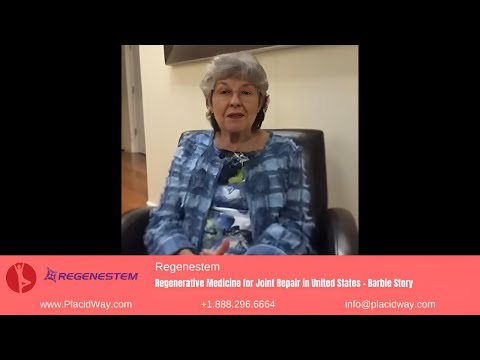











Share this listing